Bodyweight workout in just 25 minutes !

I'm always asked the questions as a Physiotherapist: 


When is the best time to work out?
Do I need to work out in the morning?
Do I need to work out after work?
Should I exercise outside the gym?


Truth is, it depends on the person, really. But here are three reasons why it's a great option to fit in a 25 minute bodyweight workout that can be done anywhere.

  1.  Time It can be difficult to find the time to work out, but if you can find only 25 minutes in your day, you'll be in great shape!
  2. Life can get in the way and daily life is easy to prioritize over working out. I'm here to encourage you to work out your workout time, just 25 minutes is all that takes. Staying active far outweighs the cost of failing to make healthy happen.
  3.  Location This one is important, I can write a whole blog post on why I think it's important to go to the gym, but the bottom line is this: what's important is working out – not where you do it.

Select 25 minutes, and get the most out of it. This is your chance, then!


25-Minute Bodyweight Workout These exercises perform at a moderate pace and with limited rest.


Don't just waste one minute!


  • 25 Push-ups (assisted push-ups are a good modification) 
How to Do Pushups: Techniques, Benefits, Variations


  • 25 Single leg bridges (each leg)

Single Leg Bridge GIF | Gfycat


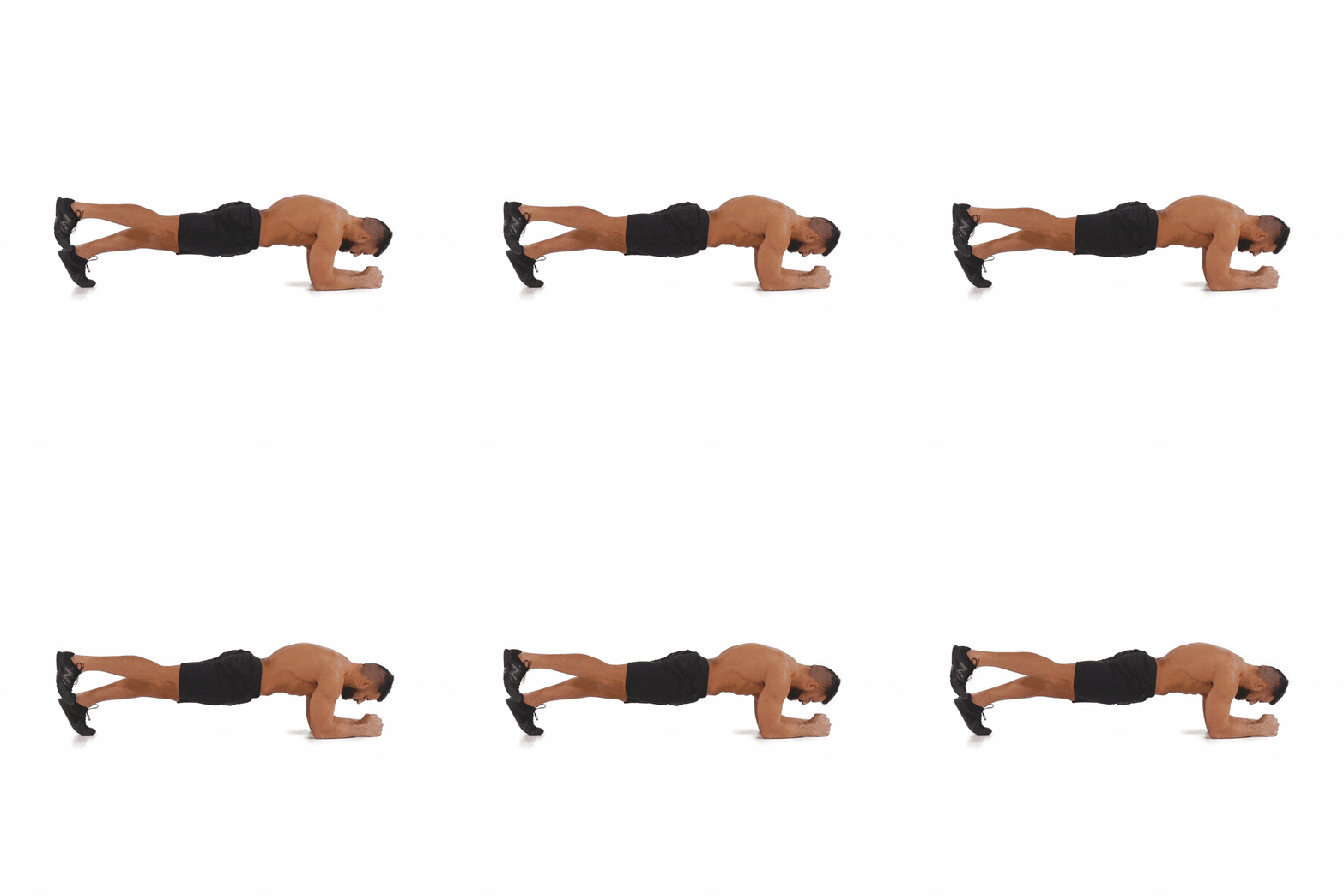
  • 25 Plank with leg left (each leg)

Plank With Leg Lift


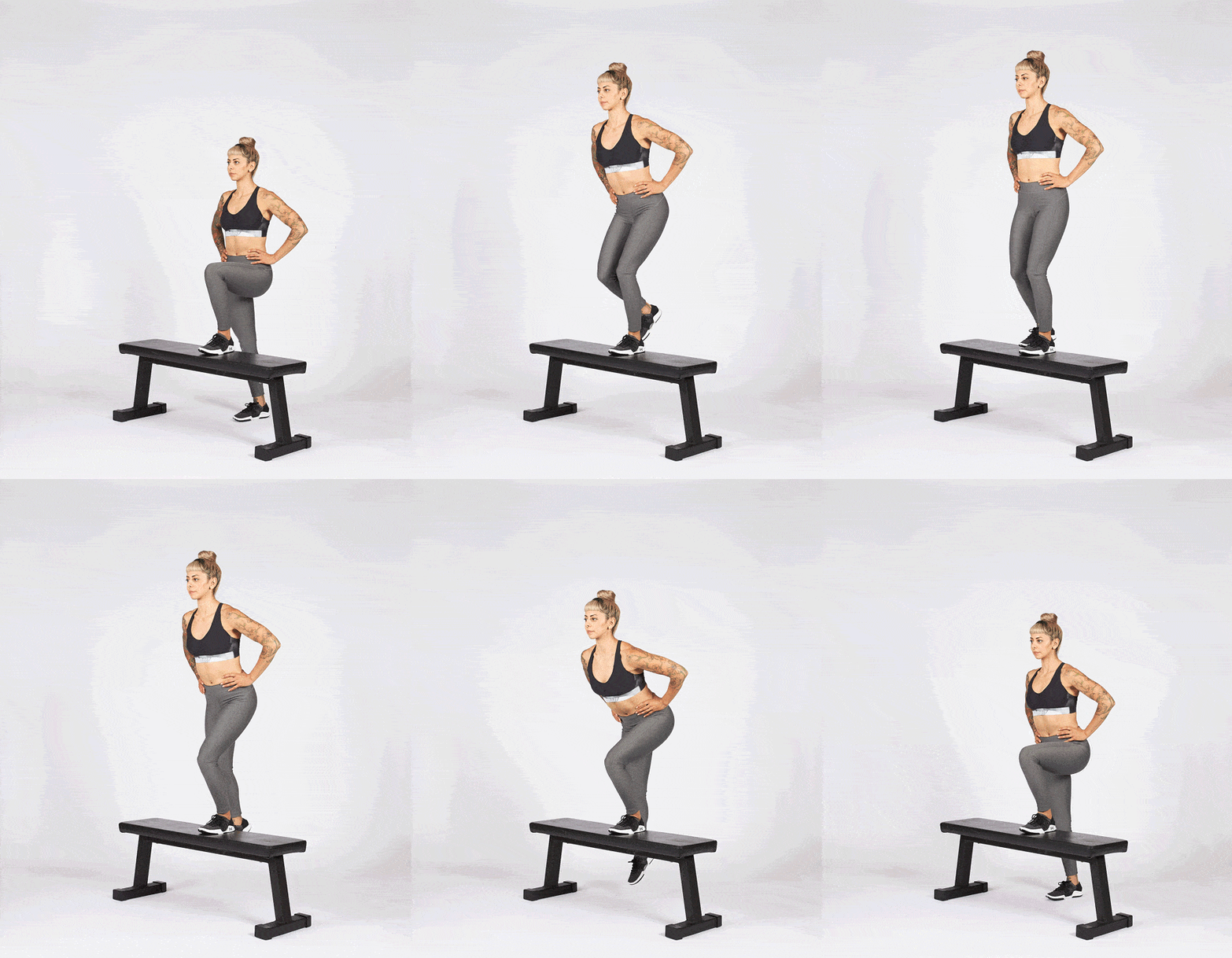
  • 25 Chair step ups (each leg)

9 Stepup Variations for Leg Strength and Power | Fitness ...


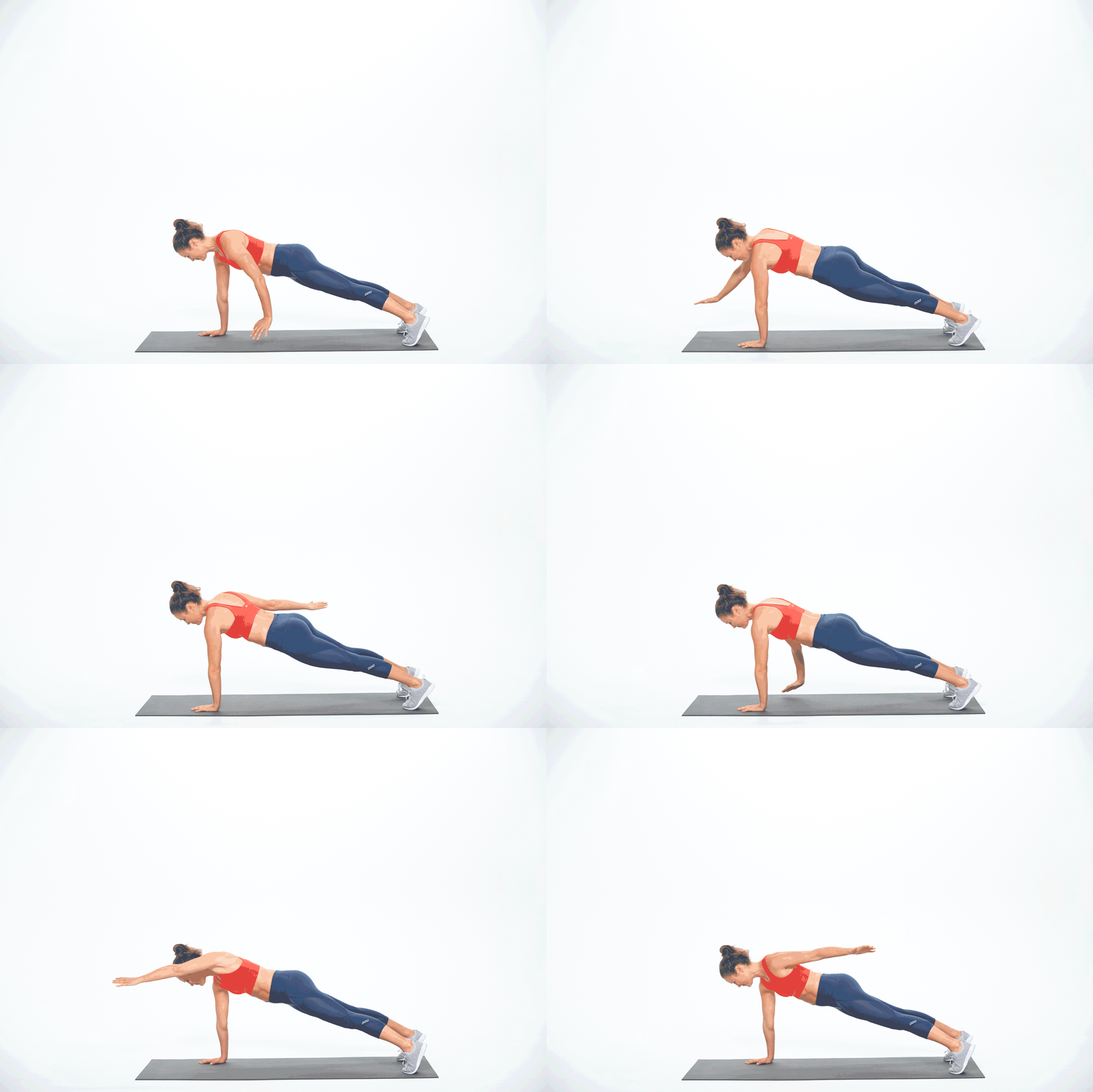
  • 25 Plank with arm lift (each arm)
How to Do Arm Circle Planks GIF | POPSUGAR Fitness


  • 100 Jumping jacks

How to Do Cross Jacks | GIF | POPSUGAR Fitness Australia

Comments

Popular posts from this blog

What is Anatomical pulley? Example of Anatomical pulley

Understanding the Importance of Anatomical Pulleys in Physiotherapy As a physiotherapy student, it is essential to have a good understanding of the human body's anatomy and how it works. One of the essential structures in the body that plays a significant role in movement and biomechanics is the anatomical pulley. In this article, we will explore what an anatomical pulley is, its types, and its importance in physiotherapy. What is an Anatomical Pulley? A pulley is a simple mechanical machine that consists of a wheel that turns readily on the axle, usually grooved for a rope or a wire cable. In the human body, the pulley is replaced by a bone, cartilage, or ligament, and the cord is replaced by a muscle tendon. The tendon is lubricated by synovial fluid, and the surface of the tendon is covered by a thin visceral synovial membrane. The tendon is lubricated so that it may easily slide over the pulley. Classification of Anatomical Pulleys There are mainly four classes of pulleys ...

JOINTS OF HUMAN BODY

A junction between 2 or more bones/cartilages is called a JOINT. Joint permits mobility and stability. A human skeletal has approximately more than 200 bones that are connected by joints. Also, joints help to form cavities like cranial, thoracic, abdominal & pelvic cavities. There are more joints in the child than in an adult because with age some bones fuse. CLASSIFICATION OF JOINTS: 1] STRUCTURAL CLASSIFICATION 1.Fibrous Joints -The bones are joined by fibrous tissue and these are mostly immovable or slightly movable joints. 3 Subtypes:- a) Sutures -They are present only in the “skull”. In this type, bones are connected by connective tissue called a sutural ligament. Fusion of bony components occurs later in life leading to the formation of bony union. In infants, there is an anatomical feature in the skull comprising soft membranous gaps called “FONTANELLE”. Eg: Suture between frontal & parietal bone, temporoparietal suture b) Syndesmosis In this type, bones are connected di...

Electrotherapy Simplified by Basanta Kumar Nanda PDF Download

Electrotherapy Simplified  by Basanta Kumar Nanda The aim of this book is to focus on the electrotherapy simplified. Electrotherapy is one of the important aspects among the various approaches of patient management available to a physiotherapist. Electrotherapy Simplified has tried to give comprehensive knowledge on electrotherapy and actinotherapy, starting from basic electricity and magnetism to the theoretical and clinical aspects of the different modalities applied by physiotherapists.  This book consists of 19 chapters, which include an introduction, inflammation, repair, and role of physical agents, electrical fundamentals, magnetic energy, valves, transistors, and rectifiers, electrical measurement systems and distribution of electricity, electrophysiology of nerve transmission, and muscle contraction, low-frequency currents, electrodiagnosis, medium frequency currents, low-intensity laser therapy, ultraviolet radiation, and traction.  About 250 objective question ...